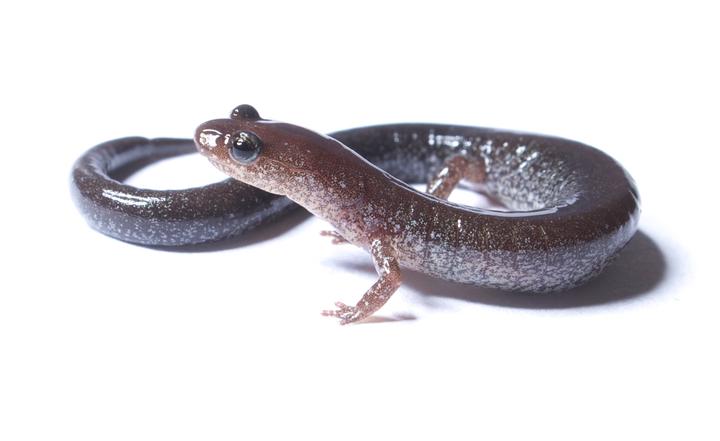
 Image credit: Brian Gatwicke
Abstract
Physiological traits, such as the critical thermal maximum (CTmax, defined as an individual’s upper thermal tolerance limit), can be important for understanding species’ vulnerability to climate and habitat change. A separate trait, thermal acclimation capacity, is defined as the physiological adjustment of organisms to temperature variation, which can influence phenotypic traits such as CTmax. The relationship between acclimation capacity and CTmax has been widely studied in ectotherms like fish, amphibians, and reptiles, and it is generally observed that CTmax increases with higher acclimation temperatures. However, there is a lack of information about whether amphibians respond differently to long- versus short-term acclimation. Understanding thermal acclimation capacity under rapid environmental change is important, as high acclimation capacity may reduce vulnerability. Here, we evaluated the thermal acclimation capacity of the Eastern Red-backed Salamander, Plethodon cinereus, in response to short- and long-term acclimation treatments in a laboratory setting. We exposed salamanders to three different treatments, control animals were maintained at 15 °C for 30 days; animals in the short-term acclimation group were maintained at 15 °C for 28 days, and 23 °C for 48 hours before testing CTmax; and animals in the long-term acclimation group were maintained at 23 °C for 30 days. We measured the CTmax of all animals at the end of the experiment to determine whether tolerance to high temperatures varied depending on the length of exposure to warm conditions. Although we observed a slight increase in CTmax from the control treatment to the short-term (+0.93 °C) and long-term (+0.98 °C) acclimation treatments, the difference in CTmax between acclimation treatments was small (0.05 °C), and none of the differences were statistically significant. Several factors may explain the low variation in CTmax described in our study, including phylogenetic conservation of upper thermal limits, or a lack of sufficient temperature differences in our treatments to elicit a physiological response. Regardless, our results provide limited evidence that different acclimation periods affect the degree of phenotypic plasticity in CTmax in Plethodon cinereus.

James Watling
Associate Professor and Coburn Chair of Environmental Science
My research and teaching interests focus on environmental biology and GIS